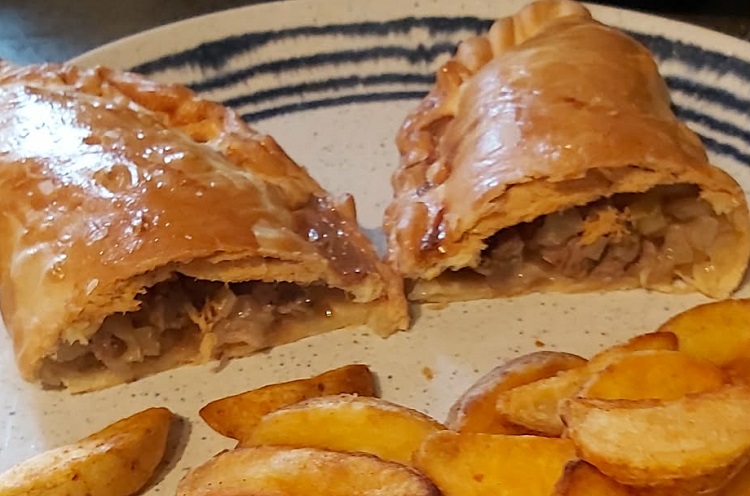
When we were in Cornwall, Mr P was hellbent on having a traditional Cornish pasty, and he was not disappointed by the selection of shops dedicated to selling them.
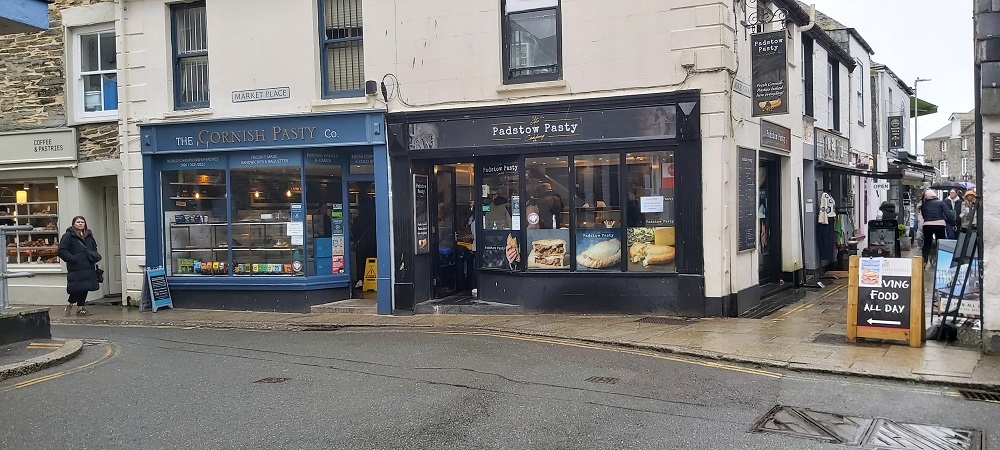
For something that looks like a simple handheld pie, the Cornish pasty, I was surprised to discover, had a surprisingly rich history.
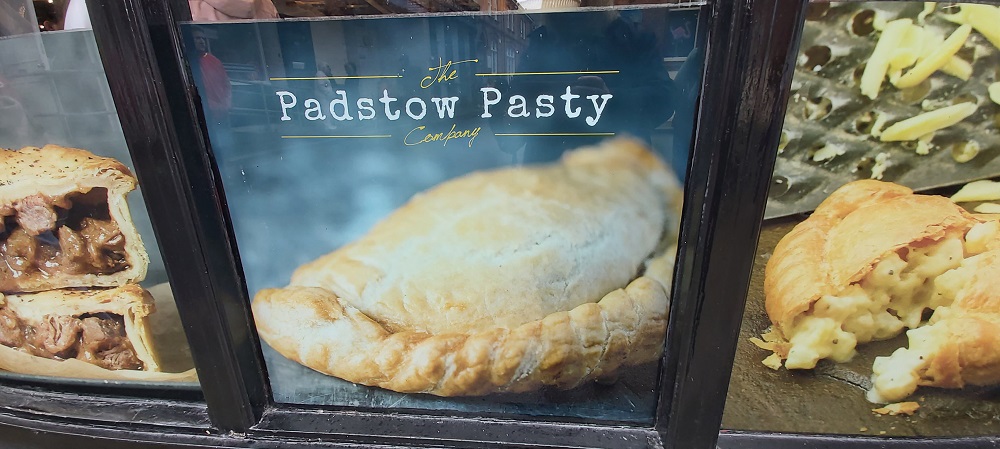
I wanted to take photos inside the shop, but Mr P gave me one of those looks that said ‘over my dead body’. And then I forgot to take some pics when we got back to the accomodation. Doh!
Anyways, digging into the history of the humble Pasty, I discovered is most closely tied to Cornwall, where it became a staple food by the 18th and 19th centuries. Back then, Cornwall was a major mining region, especially for tin. Because the pasty was easy to carry, it was essentially the perfect packed lunch for miners: practical, filling, and easy to carry underground.
A traditional pasty is made with beef, potatoes, swede, and onion, all sealed inside a thick pastry crust. The distinctive crimped edge wasn’t just decorative: miners would hold the pasty by that crust with dirty hands (often contaminated with substances like arsenic in the mines) and then throw the crust away after eating the rest. Clever bit of early food safety.
The idea of filled pastries goes back much further. Similar foods existed in medieval England and even earlier, but the Cornish version became distinct over time. By the 19th century, as Cornish miners emigrated around the world (to places like the Americas and Australia), they took the pasty with them, spreading its influence globally.
Today, the “Cornish pasty” is actually protected under European law (PGI status—Protected Geographical Indication). That means only pasties made in Cornwall following traditional methods can officially use the name. You’ll still find variations everywhere, but the authentic version is strongly tied to its roots.
When we returned to Portugal, I tried to make some…
I bought the pastry and then used the filling ingredients from this website: https://britishfoodhistory.com/2019/09/13/cornish-pasties/ ChatGPT suggested swede instead of turnip, but I stuck with turnip.
For the filling:
300g chuck, skirt or braising steak, gristle and fat removed.
(I don’t know what the equivalent names in Portugal so I used beef estufado, which is stewing beef)
125g onion
125g turnip,
250g potato, peeled and thinly sliced (I diced)
salt and freshly-ground black pepper
thyme, fresh or dried (optional)
4 tbs beef stock or water
Egg wash:
1 egg beaten with ½ tsp salt
Method: Dice meat, potatoes, turnip and onion. Put in a bowl and season.
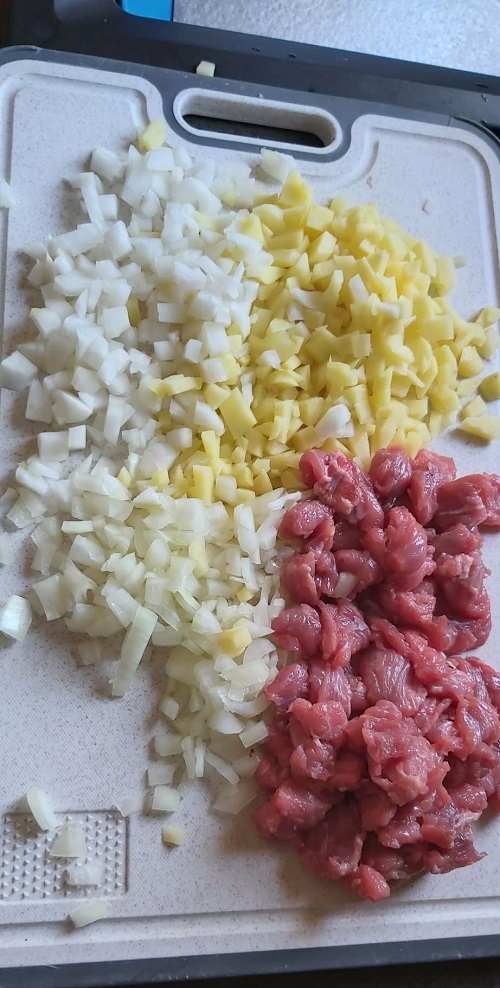
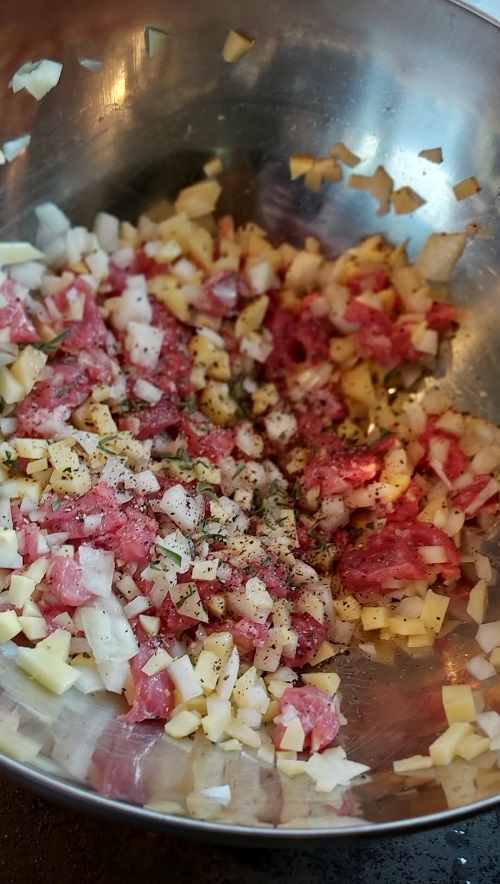
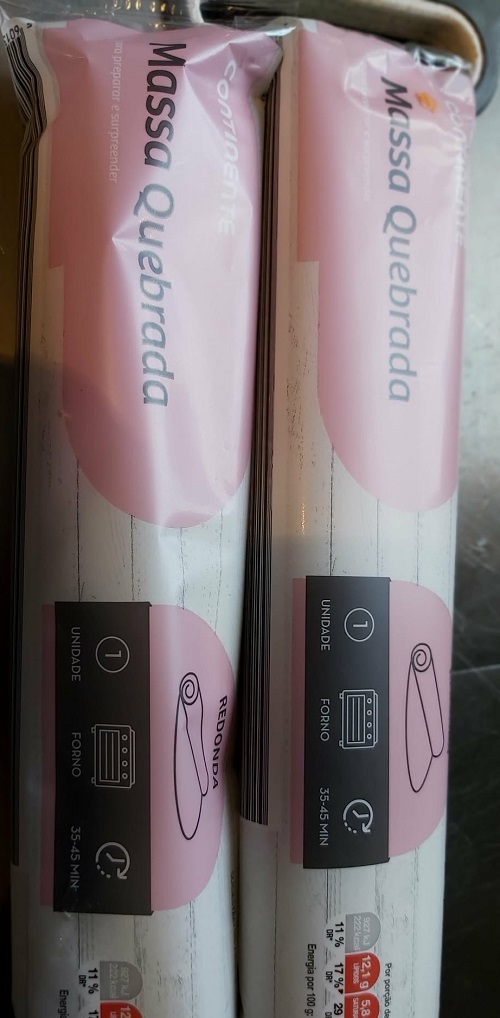
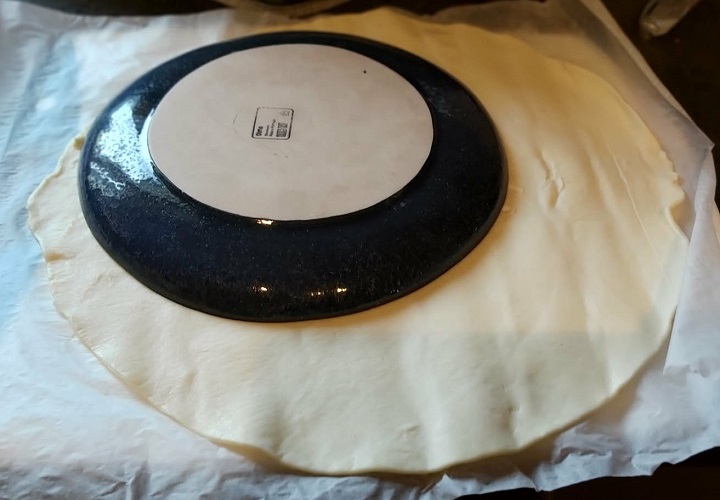
I used premade shortcrust pastry (Massa Querada) Cut the pastry to the size of a tea plate. Add a couple of tablespoons of gravy stock to the mixture before spooning it onto the pastry circle.
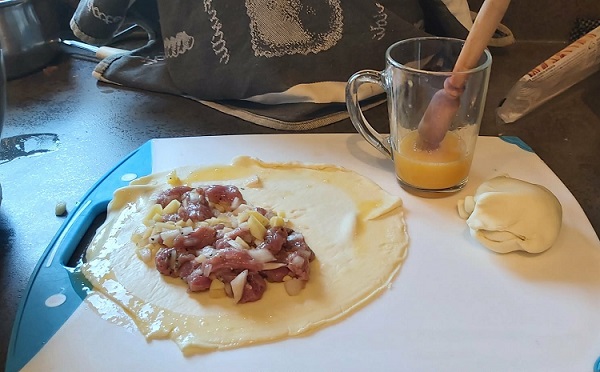
Brush the edges of the pastry with the egg glaze, seal, and then coat the top with the egg glaze. (1 pack of pastry made two pasties).
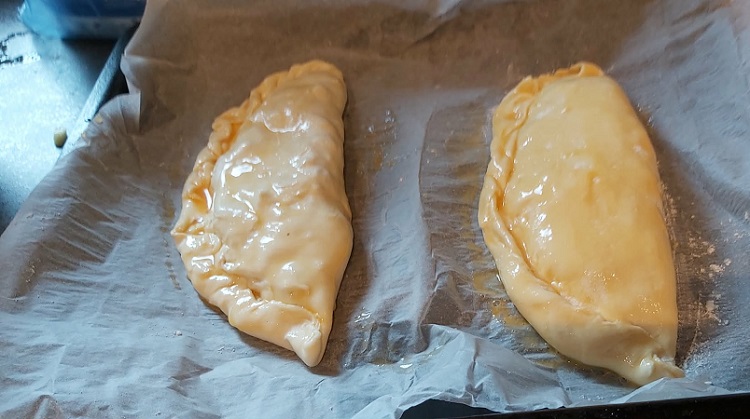
Bake for one hour: 200 °C for 20 minutes or until golden brown, then turn down to 180C
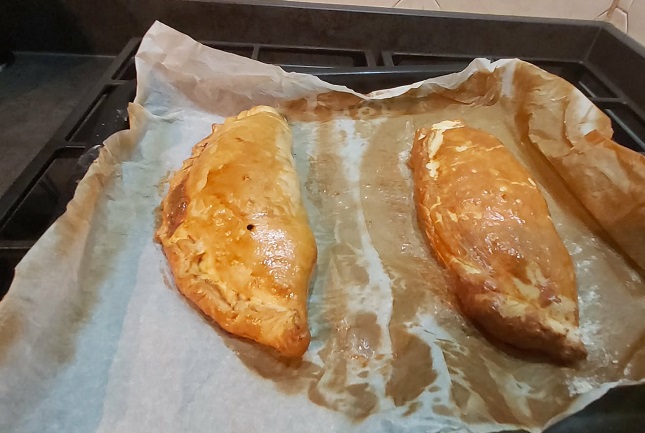
Okay, they don’t resemble a true Cornish Pasty, and Mr P said it tasted okay. When I’ve made pasties in the past, I have always slow-precooked the filling.
Do you make Cornish pasties? And what method/ingredients do you use? I was going to add carrot, but apparently that is a no, no.
That’s it for this week, my fellow foodies!
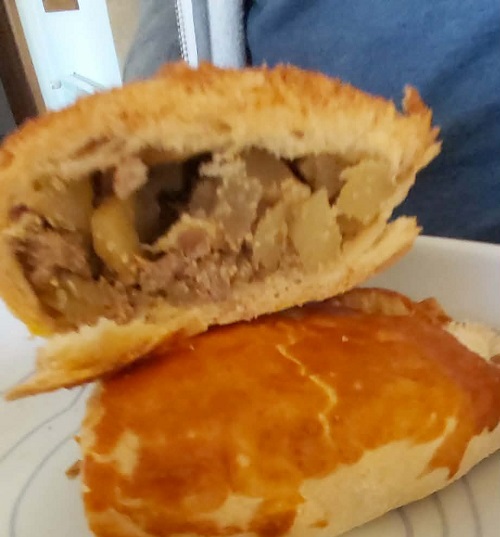
ETA: Mr P says they are better eaten cold than hot!
*

Why not join the #FoodieFriday Challenge Blog Hop?
Let’s talk about food, whether it’s sharing your favourite recipes, growing fruit and vegetables, your harvest ups and downs, hints and tips, favourite restaurants or pictures of plates of food – even diets. If it’s food-related, why not post it on your blog and add it to the Foodie Friday Blog Hop
- Create a post about food at any point during the following week and include the tag: #foodiefriday. You’re welcome to use previous ‘food-related’ posts.
- Link to my weekly post to create a pingback, and I will endeavour to visit and comment.
- Don’t forget to add a link to your post when you comment below so we can keep track and support each other.
- Please don’t forget to check out other bloggers’ posts.
- tag #foodiefriday
Related Posts:


What a fun experiment! I’ve never had one and am now intrigued!
I’m truly in a cooking rut and need to find a way out of it. I may need to stalk your blog for inspo ;-)
Hope you week rounds out wonderfully!
LikeLiked by 1 person
Hi Melissa, did you try cooking these for your family?
LikeLiked by 1 person
I have not yet! I have to eat gluten free so it will take some adaptation, but it’s on my list!
LikeLike
We had Cornish pastries on our last ever trip to the USA in a tiny little place. Then we had them this trip in England. 100% going to make them. Will let you know how it goes.
LikeLiked by 1 person
Hi Bernie, how did the pasties turn out? Sorry I’ve been off grid for a while
LikeLike
Oh I haven’t got them made yet. Likely in the fall.
LikeLike
This is so interesting! In a novel I just finished they visited Cornwall and had these pastries along with some local wine.
LikeLiked by 1 person
Hi Maria, I have heard of the local cider which I tried but not wine. Interesting.
LikeLiked by 1 person
I did not know, but I looked this up. I grew up in Michigan. Pasties are famous in northern Michigan. I found a guy on youtube who was making them, and he said that they started out in Cornwall, England. So, I wonder, how did they end up being “a thing” in northern Michigan? I think that there are more descendants of Germans and Polish people up there. Hmmm. In case you’d like to see if they are similar to the true Cornish pasties, here’s the guy and his recipe.
Jeanne
LikeLiked by 1 person
Thanks, for the vido, Jeanne. Interesting to see he also adds carrots. They probably arrived in Michigan through Cornish people making a taste of home and they caught on.
LikeLike
*Second try, I’m getting a “can’t be posted” :(
Your homemade version looks delicious. I’d been hard pressed to throw away the arsenic crust, I love pie crust!
LikeLiked by 1 person
So did I, Tracy. Just a shame that any pastry is hard for me to digest now.
I wonder why you were havng difficulty posting? I have now abandoned firefox and use Chrome when I post and the issues I had seemed to resolve
LikeLike
Yes, excellent history! And yours sure are pretty.
LikeLiked by 1 person
haha… not sure about pretty but r P thought they tasted okay.
LikeLiked by 1 person
Thanks for this excellent history and for sharing your recipe, Carole. I believe I mentioned to you that when I travelled with hubs in the semi to the Upper Peninsula of Michigan, USA, there were Cornish pasty shops on every corner, it seemed. And yes – the hand pies came to the area via miners who immigrated from the UK. I’ve never tried to make them, but I want to. I’ll make a sister post to yours when/if I do make them. Have a great day!
LikeLiked by 1 person
Thanks, Terry. I hope your pasties turn out better than mine. I had lots of filling over so I made a couple of smaller ones and froze them.
The history is interesting and the thick crust makes sense.
LikeLiked by 1 person
Thankful for having lunch with friends – Ladyleemanila
LikeLiked by 1 person