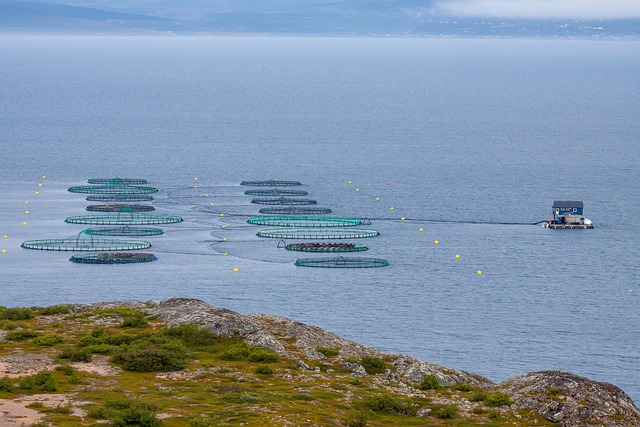
“The aquaculture industry promotes farmed fish as a safe, nutritious ocean protein that modern consumers can trust. This promise has helped industrial fish farming grow into a sector that now produces more sea animal products than wild‑capture fisheries. Yet the reality on many farms is much closer to factory farming on land: tens or hundreds of thousands of animals confined at high densities in pens, cages, or ponds where waste, pathogens, and parasites flourish. These conditions drive repeated disease outbreaks, large‑scale die‑offs, and heavy reliance on antibiotics that are important to human medicine.”
It’s really worth subscribing to this website. With so much harmful health and food misinformation circulating on the web this is the one place I now go to check the facts.
***
Then we have the issue of microplastics in the sea which also enter a fish’s foodchain and ultimately ours. Only last week numerous volunteers from our local community particpated in a beach clean up to remove a tide of plastic and other rubbish washed up on the beach by the recent storms.
So where else can we get a regular dose of omega-3?
It seems: Flaxseed, Chia seeds and walnuts. These contain ALA, which your body only partly converts into the usable forms. Still healthy, just not as potent.
Final thoughts – AT 71 years young, while it’s important to stay informed re potential health risks, I sometimes wonder if I am worrying myself into an early grave. Because if pollutants don’t put me there, stress will. *laughing*
What are your thoughts re eating farmed fish, and when presented with a tray of fresh fish, do you care enough to ask the waiter for the provenance? (maybe I should just to see what happens)
Why not join the #FoodieFriday Challenge Blog Hop?
Let’s talk about food, whether it’s sharing your favourite recipes, growing fruit and vegetables, your harvest ups and downs, hints and tips, favourite restaurants or pictures of plates of food – even diets. If it’s food-related, why not post it on your blog and add it to the Foodie Friday Blog Hop
Create a post about food at any point during the following week and include the tag: #foodiefriday. You’re welcome to use previous ‘food-related’ posts.
Link to my weekly post to create a pingback, and I will endeavour to visit and comment.
Don’t forget to leave a link to your post in the comments below so I can keep track and we can support each other.
Please don’t forget to check out other bloggers’ posts.
I have not eaten farmed fish in a long time. I heard it was not good many years ago. However, it’s shocking now how hard it is to get wild-caught fish. Overfishing is a problem. I hope and pray that someone is working on that.
Hi, I’d not really considered it before reading that article. Even wild caught fish from the rocks I’m not so sure is not polluted nowadays. Swordfish is defo off the list for me now with my foucs now on smaller fish such as sardines etc
Hi Rebecca, after listening to the article my concerns are regarding disease and the conditions in which the fish are kept. Nowadays, I think it will be difficult to avoid farmed anything. But I do LOVE fish.
Hello from Australia! You may remember I am medically trained and am still studying – being decades older than you – natural integrated medicine for the last thirty years :) ! Eating fish is humongously important for one’s health and I love the taste and YES, farmed fish is bad for you and for the environment! It is arguable whether eating farmed fish is better than eating no necessary fish at all – if I truly cannot always get wild fish I will sometimes ingest farmed fish if healthily prepared (No frying, crumbing, using seed oils!). You should be able to get wild fish where you live – if you use tinned fish – say for breakfast sandwiches or luncheon salads – the small ones like anchovies, sprats, herring etc are far better than tuna – and watch out you use wild salmon. I feel awfully sorry for farmed fish as is, seeing so many of them die in the overcrowded tanks!
Hi Eha, yes, I also enjoy fish but while I live next to the sea I am unsure how much wild fish is sold in restaurants. Next time I go to a restaurant or buy in the supermarket I plan to ask. You make a good point re tinned fish. Mr P eats lots of tinned tuna… I will have the conversation with him about other choices.
YES, farmed fish is bad for you and for the environment! It is arguable whether eating farmed fish is better than eating no necessary fish at all
That’s the debate I am having with myself at the moment
The problem is that in most restaurants either they would not even know or think you were a ‘bothersome’ customer and tell you a fib! Easier when you are buying from a fishmonger – in Australia it is illegal for them to lie to you. I try to keep away from the larger fish both raw and in tins (eg tuna) but still try for 2-3 fish meals a week – but then, coming from NE Europe I am used to small fish like anchovies, sprats, herring on my breakfast sandwiches etc. which are not usually affected and are caught wild.
we have loads of sardines here …extremely popular with the Portuguese. They even have a yearly sardine festival in the village. I must try and persuade myself they are nice but just the smell puts me off
If you shallow-fry them I don’t think they would smell? The tinned ones from Portugal are absolutely beautiful – try in oil if the water ones don’t suit – I have a dear friend in SW France who eats them on an open sandwich every morning – they cost a fortune here and naturally one should not use them anyways because of the travel damage to nature. Try once or twice !!!
Oh wow, I LOVE the smell of sardinhas assadas! It reminds me so much of Portugal. They are soo tasty. Funny how we have such emotions about smell, both positive and negative. Once I was in a neighborhood of Baltimore, Maryland (east coast USA) and suddenly that smell! Apparently grilled sardines are quite popular there as well.
Hi ephesians413, try as I may, I just can’t persuade Mr. P to BBQ sardines as he says they stink and are full of bones. I agree with you they are tasty. Maybe I’ve tempted you to have some this weekend?
Please be aware of eating too much tuna. Some years ago I read the biography of the model Caprice and she ate lots of it, trying to diet and ended up in hospital having damaged her liver by this practice. This always stuck with me.
At home, where we eat most of the time, our diet is strictly plant based. Occasionally, I’ll eat clams, shrimp, or fish but no higher up the food chain. But not too often. We humans are draining the seas of fish, mollusks, and other creatures. For me, that is a real consideration, too. In short, I don’t eat enough fish or shrimp to worry about it—two or three times a year.
The conflicting information (on everything) is a challenge. I prefer wild, but don’t totally consume just that. We grew up growing veg, and I do love my vegetables. Now I grow a smattering of citrus, berries, peppers, tomatoes & herbs. The banana experiment has not been fruitful, lol.
I’m with you, I try to stay up on health related info. Still I wonder if our longevity isn’t mostly tied to genetics?
Hi Tracy, I find myself going in ever decreasing circles re the actual truth. We can’t get a ‘family’ doctore in Portugal at the moment so the only place I have for reference is the web.
I am afraid I no longer have the energy to grow veg … sigh. So this year I am reliant on so called ‘bio’ products.
Haha… I also have a banana plant and it can’t decide if it wants to live or die. Bananas would be a bonus :)
GEnetics… yes. Although my parents grew up in an age of no USP’s so… fingers crossed
Many years ago, when we billeted young hockey players, we had a young man stay with us who was very well versed in the entire farmed fish industry. He was raised in a fishing community and was solidly against fish farms for the exact reasons you stated, Carole. He taught us to look for wild pacific salmon and tuna when we buy canned fish. As far as other fish goes, we either eat fresh lake fish that we or someone we know has caught, or, if we order fish when at a restaurant, we lean towards places that offer fresh caught from the sea. As a result of our scrutiny, fish isn’t a regular item in our diets.

 Piglet in Portugal
I have not eaten farmed fish in a long time. I heard it was not good many years ago. However, it’s shocking now how hard it is to get wild-caught fish. Overfishing is a problem. I hope and pray that someone is working on that.
LikeLiked by 1 person
Hi, I’d not really considered it before reading that article. Even wild caught fish from the rocks I’m not so sure is not polluted nowadays. Swordfish is defo off the list for me now with my foucs now on smaller fish such as sardines etc
LikeLiked by 1 person
We love fish and do eat the farmed variety as well as wild caught. I think knowing the farming practices for the fish we eat is important.
LikeLiked by 1 person
Hi Rebecca, after listening to the article my concerns are regarding disease and the conditions in which the fish are kept. Nowadays, I think it will be difficult to avoid farmed anything. But I do LOVE fish.
LikeLiked by 1 person
Yes, so much to love about fish!
LikeLiked by 1 person
Hello from Australia! You may remember I am medically trained and am still studying – being decades older than you – natural integrated medicine for the last thirty years :) ! Eating fish is humongously important for one’s health and I love the taste and YES, farmed fish is bad for you and for the environment! It is arguable whether eating farmed fish is better than eating no necessary fish at all – if I truly cannot always get wild fish I will sometimes ingest farmed fish if healthily prepared (No frying, crumbing, using seed oils!). You should be able to get wild fish where you live – if you use tinned fish – say for breakfast sandwiches or luncheon salads – the small ones like anchovies, sprats, herring etc are far better than tuna – and watch out you use wild salmon. I feel awfully sorry for farmed fish as is, seeing so many of them die in the overcrowded tanks!
LikeLiked by 1 person
Hi Eha, yes, I also enjoy fish but while I live next to the sea I am unsure how much wild fish is sold in restaurants. Next time I go to a restaurant or buy in the supermarket I plan to ask. You make a good point re tinned fish. Mr P eats lots of tinned tuna… I will have the conversation with him about other choices.
That’s the debate I am having with myself at the moment
LikeLiked by 2 people
The problem is that in most restaurants either they would not even know or think you were a ‘bothersome’ customer and tell you a fib! Easier when you are buying from a fishmonger – in Australia it is illegal for them to lie to you. I try to keep away from the larger fish both raw and in tins (eg tuna) but still try for 2-3 fish meals a week – but then, coming from NE Europe I am used to small fish like anchovies, sprats, herring on my breakfast sandwiches etc. which are not usually affected and are caught wild.
LikeLiked by 1 person
we have loads of sardines here …extremely popular with the Portuguese. They even have a yearly sardine festival in the village. I must try and persuade myself they are nice but just the smell puts me off
LikeLiked by 1 person
If you shallow-fry them I don’t think they would smell? The tinned ones from Portugal are absolutely beautiful – try in oil if the water ones don’t suit – I have a dear friend in SW France who eats them on an open sandwich every morning – they cost a fortune here and naturally one should not use them anyways because of the travel damage to nature. Try once or twice !!!
LikeLiked by 1 person
Oh wow, I LOVE the smell of sardinhas assadas! It reminds me so much of Portugal. They are soo tasty. Funny how we have such emotions about smell, both positive and negative. Once I was in a neighborhood of Baltimore, Maryland (east coast USA) and suddenly that smell! Apparently grilled sardines are quite popular there as well.
LikeLike
Hi ephesians413, try as I may, I just can’t persuade Mr. P to BBQ sardines as he says they stink and are full of bones. I agree with you they are tasty. Maybe I’ve tempted you to have some this weekend?
LikeLike
Please be aware of eating too much tuna. Some years ago I read the biography of the model Caprice and she ate lots of it, trying to diet and ended up in hospital having damaged her liver by this practice. This always stuck with me.
LikeLiked by 1 person
Hi Lana, thanks for the tip. I don’t eat much Tuna but Mr. Piglet does as an easy sandwhich filling at lunch time
LikeLiked by 1 person
Yes, sorry, my comment was meant for Mr P. Egg mayo as a mix up could be good! With cress :-)
LikeLiked by 1 person
At home, where we eat most of the time, our diet is strictly plant based. Occasionally, I’ll eat clams, shrimp, or fish but no higher up the food chain. But not too often. We humans are draining the seas of fish, mollusks, and other creatures. For me, that is a real consideration, too. In short, I don’t eat enough fish or shrimp to worry about it—two or three times a year.
LikeLiked by 1 person
Hi Laurie, yep but even veg can be conatminated with pesticides and other nasties. Sigh.
… so sad.
LikeLiked by 1 person
For sure. We buy organic as much as we can, but unless you grow it yourself, you never really know.
LikeLike
The conflicting information (on everything) is a challenge. I prefer wild, but don’t totally consume just that. We grew up growing veg, and I do love my vegetables. Now I grow a smattering of citrus, berries, peppers, tomatoes & herbs. The banana experiment has not been fruitful, lol.
I’m with you, I try to stay up on health related info. Still I wonder if our longevity isn’t mostly tied to genetics?
LikeLiked by 1 person
Hi Tracy, I find myself going in ever decreasing circles re the actual truth. We can’t get a ‘family’ doctore in Portugal at the moment so the only place I have for reference is the web.
I am afraid I no longer have the energy to grow veg … sigh. So this year I am reliant on so called ‘bio’ products.
Haha… I also have a banana plant and it can’t decide if it wants to live or die. Bananas would be a bonus :)
GEnetics… yes. Although my parents grew up in an age of no USP’s so… fingers crossed
LikeLike
Many years ago, when we billeted young hockey players, we had a young man stay with us who was very well versed in the entire farmed fish industry. He was raised in a fishing community and was solidly against fish farms for the exact reasons you stated, Carole. He taught us to look for wild pacific salmon and tuna when we buy canned fish. As far as other fish goes, we either eat fresh lake fish that we or someone we know has caught, or, if we order fish when at a restaurant, we lean towards places that offer fresh caught from the sea. As a result of our scrutiny, fish isn’t a regular item in our diets.
LikeLiked by 1 person
Hi Terry, I’d never considered the whole fish farming industry until now. Good tip re canned wild pacific salmon and tuna. Thank you!
LikeLiked by 1 person