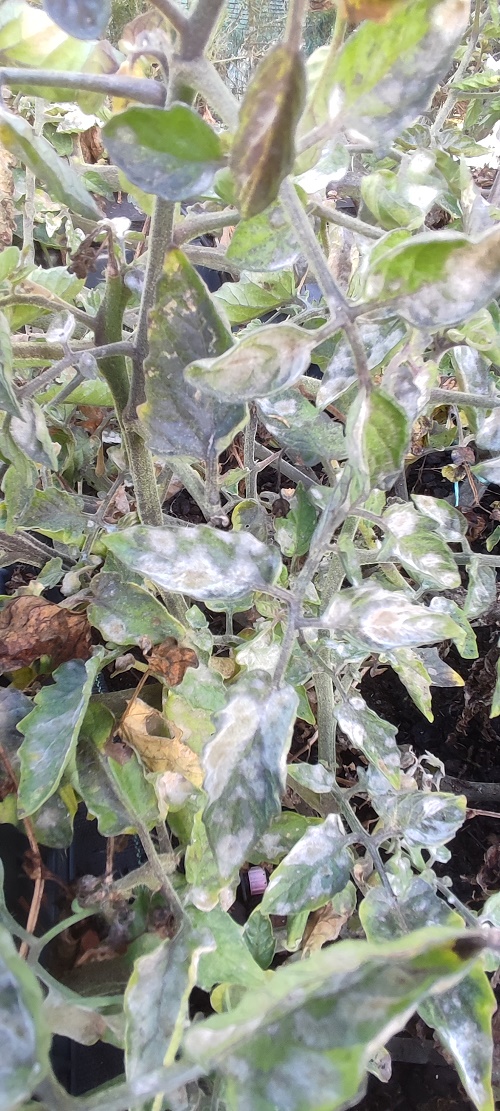
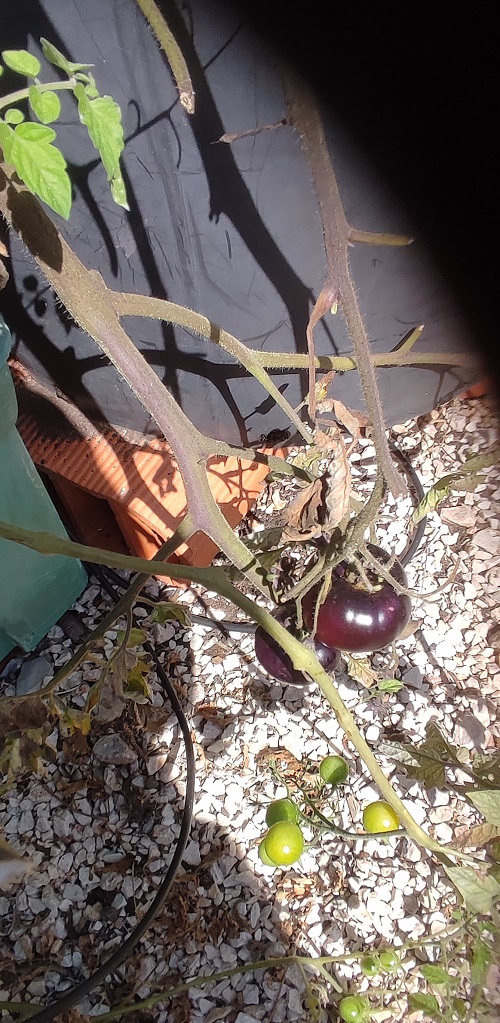
GUTTED! During our family’s visit, I neglected our vegetable patch, only to discover that my prized tomato plants had contracted the tomato equivalent of the Bubonic plague—LATE BLIGHT! I am not surprised. Over the last month, we have been enveloped in sea mist at some point most days, so the humidity has been very high.
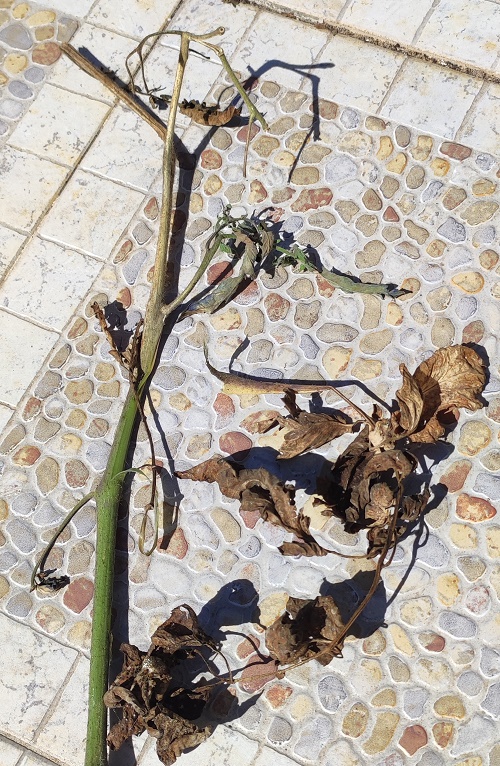
I’ve spent hours over the last couple of days meticulously removing all the infected leaves and stems, and I’m not finished yet.
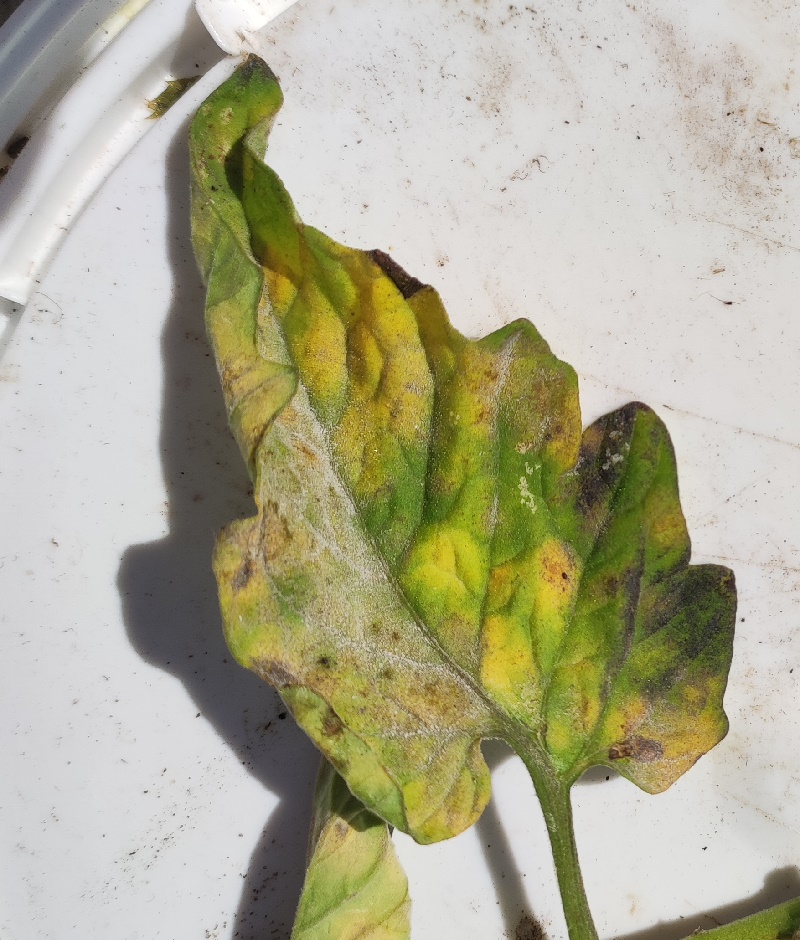


I’m now in a dilemma about the ripening tomatoes. So far, they have not been affected, which is a positive. I’ve never had any success ripening tomatoes off the vine, so now it seems that unless there is a miracle, I will have to track down recipes for green tomato chutneys and pickles.

*
Roots and Refuge offers interesting advice and treatment for blight using 3% Hydrogen Peroxide to make a spray.
“When peroxide spray is released onto a tomato plant it will oxidize the fungus growing on it. The sun will activate the hydrogen peroxide and kill the blight.”
I have some Hydrogen Peroxide, so what do I have to lose?
Update: Mr. Piglet informed me the sprayer broke years ago and had weedkiller in it. I wanted to beg the question, ‘If it’s broken, why didn’t you throw it away?” Didn’t.
I am SO glad I saved some seeds for next year several weeks ago. PHEW!
Can tomato blight spread to other vegetables? Apparently yes! It can spread to peppers, cucumbers, and squash. Holy moly! I’ve just planted the baby cucumber and zucchini plants I’ve nurtured from seed.
The following article on Back to the Goodlife also highlights soil contamination issues.
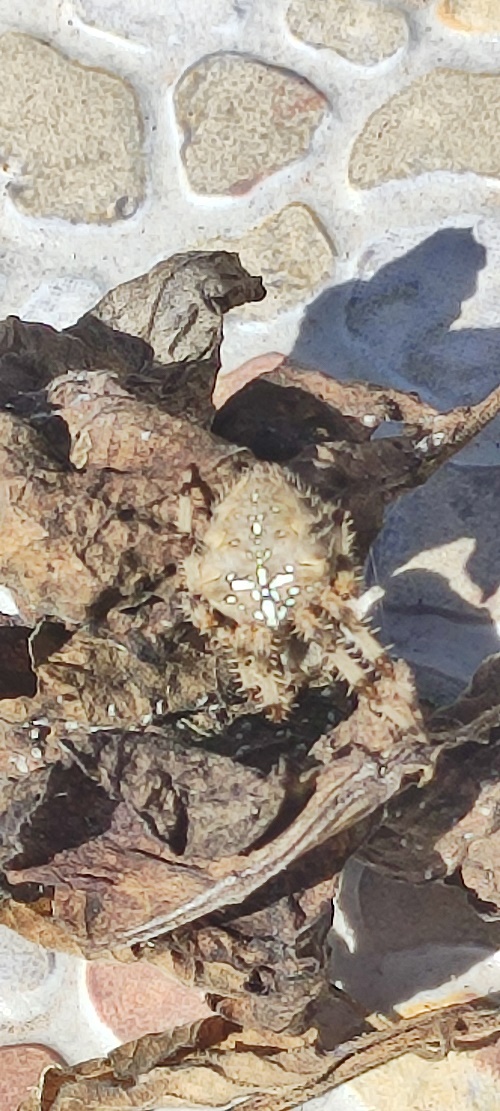
To top it all, I found this little critter hiding in a leaf I had been holding and photographing. My day just got better! More about him another time. Did you hear me scream?

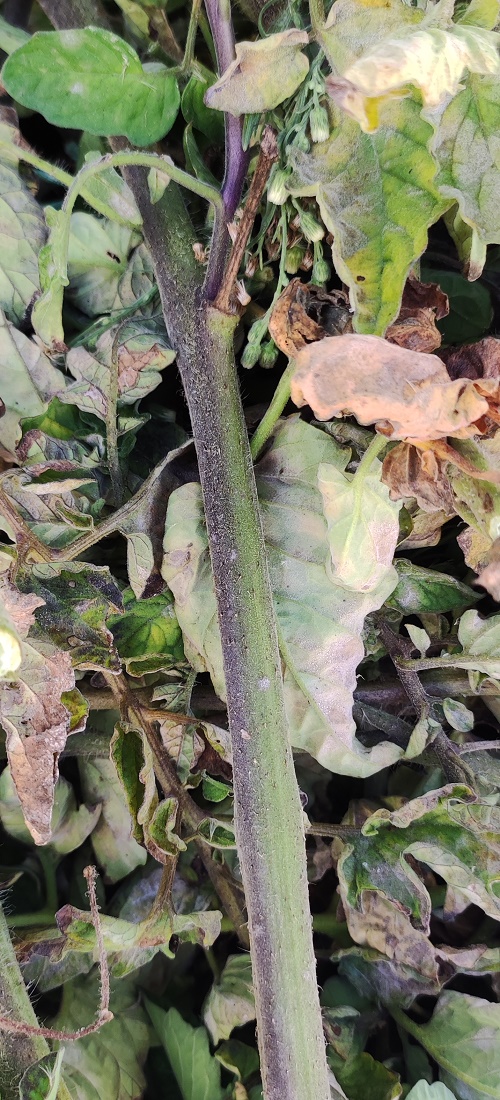
UPDATE: This morning, I went to check on my sickly tomatoes and remove the rest of the infected plants, but I was greeted with blight and a white mould pandemic.
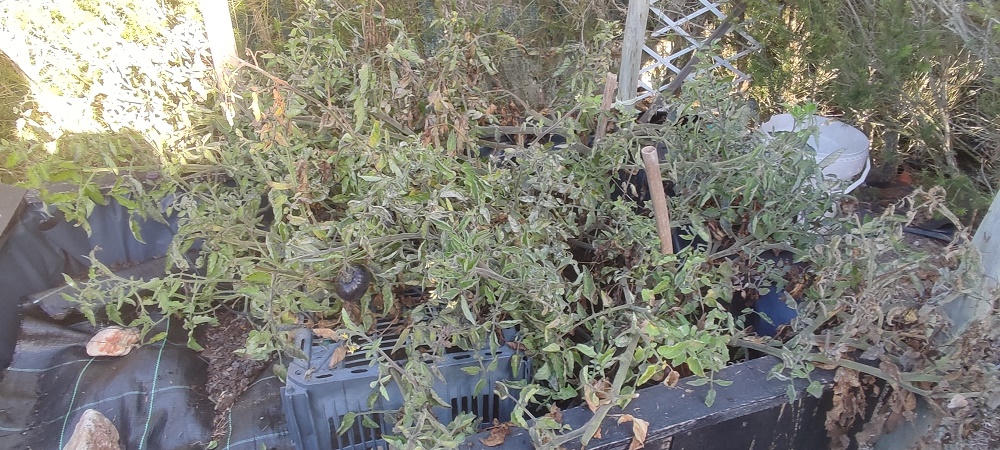
Not only did they suffer from blight, but overnight, they developed white mould. I can’t believe how quickly this spread!

Only a couple of weeks ago, I had tomatoes growing out of my ears!
What pests and diseases have attacked your garden this year and how did you deal with them?
Related Post

 Piglet in Portugal
Oo no, tomatoes are difficult by the end of the season.
LikeLiked by 1 person
*pulls sad face* I was hoping for another few weeks. AND today, the Heritage Black Tula tomatoes I was experimenting with as part of a seedshare exchange and I’ve been nurturing since March also have blight and will need to be destroyed.
LikeLike
oh my goodness! how sad. yikes about the camouflaged critter!! eeek!
LikeLiked by 1 person
gardening is full of ups and downs. Ho hum. Yeah, the critter was the cherry on the cake. that will teach me to take my gloves off …
LikeLiked by 1 person
So sad to hear of the tomato blight and mould. Glad you harvested so many tomatoes before it occurred.
LikeLiked by 1 person
At least it was my best ever harvest … and saved seeds for next year before the blight set in.
LikeLiked by 1 person
You were so wise to put aside seeds! Well done.
LikeLike
Heartbreaking! My tiny tomato patch always succumbs to a kind of blight, but it comes at the end of the season and doesn’t affect anything else, including my yield.
LikeLiked by 1 person
Hi Laurie, I’ve never seen such a bad attack of mould and blight. Next year I’ll be more mindful I have my fingers crossed that the peppers survive.
LikeLike
I’m sorry about your tomatoes. I’ve been fortunate to have not dealt with tomato diseases in my climate. In my opinion, the main thing to do to keep pests and diseases at bay for tomatoes is to have good airflow.
LikeLiked by 1 person
The airflow I think wasn’t that great. and TBH I was too slow to react. You are lucky to live in a climate where high humidity is not problematic.
LikeLiked by 1 person
Though I don’t have to deal with the humidity, I struggle with the large heirloom tomatoes here because the low humidity can cause cracking in tomatoes. One rainstorm can crack most of the tomatoes on the vine.
I don’t think anyone can react quickly in the garden as we can never be quite sure of what is going on the plant until whatever it is begins to spread.
LikeLiked by 1 person
Ugh. That sucks big time. Yesterday, I went out and discovered that the Kohlrabi plants have been absolutely inhaled by billions of flee beetles (I think) and so have pulled them all. In the end, I put them into the covered compost and hope that wasn’t a mistake. We got one lowly Kohlrabi out of 3 rows….so I get the frustration you feel.
LikeLike
Yeah, it’s tough when you’ve spent months nurturing fruit or veg and you just start to reap the rewards and nature decides otherwise. I don’t think I would have composted flea beetle. But it depends on their life cycle and how hot your compost bin gets. Something to ponder.
LikeLike
Oh! So sorry. What a disappointment :-(
LikeLike
Sure is. I have 4 more tom plants at the front of the house. I will spray those and just hope they survive.
LikeLiked by 1 person
How heartbreaking! I wish there was a caring reaction rather than a “like” for posts such as this one, Carole. Maybe this was a blessing in disguise. Not long ago, you were looking for recipes for your abundant tomato crop, so if there’s an upside to this, it’s maybe that you’ve been saved a lot of work. Do the containers have to be treated after an infestation of this type or do you have to get new ones for the next crop?
LikeLiked by 1 person
*laughing* yes, not having to stand for hours chopping and cooking is a positive. + I want have to water and feed them. 🙂
“Do the containers have to be treated after an infestation of this type or do you have to get new ones for the next crop?”
They grow in raised beds. … so I will have to research this. I know next year I won’t be able to grow any of the veg that are affected by blight. + I will have to remove the top six inches of soil. I think I have to treat the soil as well. Good question.
LikeLiked by 1 person